

Measuring Tools
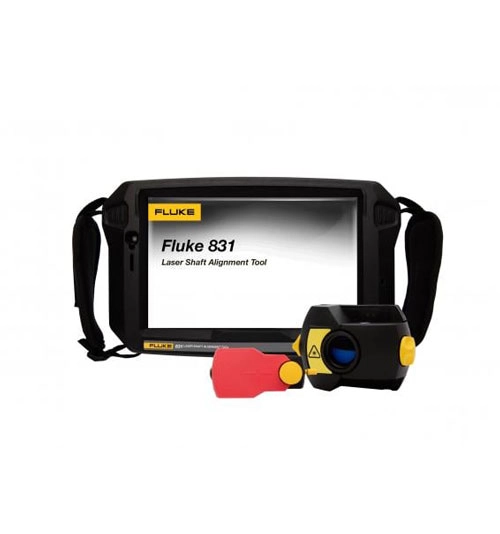
Fluke Fluke 831 Laser Shaft Alignment Tool
Precision laser alignment made easy
The rugged Fluke 831 has an intuitive guided user interface that enables quick and complete shaft alignment without advanced training or complicated programs. And while it’s easy to use, laser alignment with the Fluke 831 is powerful enough for the skilled technician. You can cover more of your machines with all the functionality needed on the plant floor, from thermal growth to user defined tolerances and more.
Reduce costs by avoiding downtime
Misalignment causes at least half of all damage to rotating machinery, studies show. Instead of fixing the problem, teams often just treat the symptoms of misalignment and replace bearings, couplings, and seals because they think alignment takes too long.
Contrary to expectations, laser alignment can be fast and easy. So, every machine that is repaired and overhauled should be aligned – not just a few. Teams that embrace laser alignment can save thousands of dollars per year by avoiding downtime and energy waste and reducing the number of bearings and seals they have to replace.
Key features
• Fast, easy, and precise alignment that adapts to your needs.
• Rugged build and the highest-in-class IP rating.
• Single-laser technology for the fastest, most accurate laser alignment.
• Cloud connection enables real-time collaboration.
• Use up to 8 measurement points to achieve precision alignment on vertical machines.
The rugged Fluke 831 has an intuitive guided user interface that enables quick and complete shaft alignment without advanced training or complicated programs. And while it’s easy to use, laser alignment with the Fluke 831 is powerful enough for the skilled technician. You can cover more of your machines with all the functionality needed on the plant floor, from thermal growth to user defined tolerances and more.
Reduce costs by avoiding downtime
Misalignment causes at least half of all damage to rotating machinery, studies show. Instead of fixing the problem, teams often just treat the symptoms of misalignment and replace bearings, couplings, and seals because they think alignment takes too long.
Contrary to expectations, laser alignment can be fast and easy. So, every machine that is repaired and overhauled should be aligned – not just a few. Teams that embrace laser alignment can save thousands of dollars per year by avoiding downtime and energy waste and reducing the number of bearings and seals they have to replace.
Key features
• Fast, easy, and precise alignment that adapts to your needs.
• Rugged build and the highest-in-class IP rating.
• Single-laser technology for the fastest, most accurate laser alignment.
• Cloud connection enables real-time collaboration.
• Use up to 8 measurement points to achieve precision alignment on vertical machines.
Download
Produk Lainnya
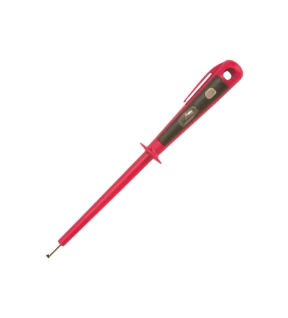
With heavy duty one-piece moulded insulation sheaths covering both blade and transparent plastic handle for extra protection and safety. Will detect 'live' electricity supply. Suitable for AC to 125 - 250V. 3mm wide tip. Conforms to DIN VDE 0680 part 6:1977-04.
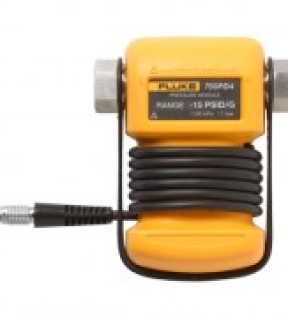
Fluke 750P31 Offers
Fluke 750P Series Pressure Modules are easy to use. To measure pressure, connect the pressure module to a pressure source or hand pump and then connect the pressure module cable to the calibrator. Apply pressure from the pressure source and it is displayed digitally on the calibrator. At the touch of a button, the pressure may be displayed in up to 11 different engineering units. When used with the 750 Series Documenting Process Calibrators, pressure readings can be date/time stamped and stored electronically for later retrieval. This saves time, eliminates errors, and supports F85compliance with quality standards and regulations.
Features
- Parameter/Range:0 to 10000 psi (0 to 700 bar)
- Burst Rating6:2x
- Hi Side Media2:316 SS
- Lo Side Media2:N/A
- Reference Uncertainty4:± 0.0175%
- Total Uncertainty 1-year (15-35°C):± 0.035%
- Total Uncertainty 1-year1:± 0.045%
- Total Uncertainty 6-month (15-35°C):± 0.03%
- Total Uncertainty 6-month1:± 0.04%
Fluke 750P Series Pressure Modules are easy to use. To measure pressure, connect the pressure module to a pressure source or hand pump and then connect the pressure module cable to the calibrator. Apply pressure from the pressure source and it is displayed digitally on the calibrator. At the touch of a button, the pressure may be displayed in up to 11 different engineering units. When used with the 750 Series Documenting Process Calibrators, pressure readings can be date/time stamped and stored electronically for later retrieval. This saves time, eliminates errors, and supports F85compliance with quality standards and regulations.
Features
- Parameter/Range:0 to 10000 psi (0 to 700 bar)
- Burst Rating6:2x
- Hi Side Media2:316 SS
- Lo Side Media2:N/A
- Reference Uncertainty4:± 0.0175%
- Total Uncertainty 1-year (15-35°C):± 0.035%
- Total Uncertainty 1-year1:± 0.045%
- Total Uncertainty 6-month (15-35°C):± 0.03%
- Total Uncertainty 6-month1:± 0.04%
Key features
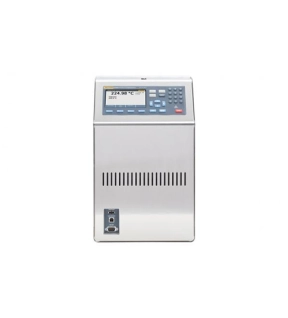
• Calibrate up to four tri-clamp sanitary sensors per batch with ± 0.1 °C temperature display accuracy.
• Covers a wide temperature range: 6109A: 35 °C to 250 °C
• 7109A: -25 °C to 140 °C.
• Stainless steel casing that withstands harsh cleaning solutions; it's easy to transport and maintain.
• Calibrate up to four tri-clamp sanitary sensors per batch with ± 0.1 °C temperature display accuracy.
• Covers a wide temperature range: 6109A: 35 °C to 250 °C
• 7109A: -25 °C to 140 °C.
• Stainless steel casing that withstands harsh cleaning solutions; it's easy to transport and maintain.

The Fluke 1503 is a great choice for basic residential and commercial electrical insulation testing. This rugged, compact tool fits in the palm of your hand. The 1503 is the same form factor as the Fluke 1507 but with a few less features. You can count on it to handle the most common tests at a most affordable price. Additional features, like the remote probe, reduce the time needed to perform repetitive testing.
Other useful capabilities:
• Measures AC/DC voltage from 0.1 V to 600 V
• Includes auto-discharge of capacitive voltage for added user protection
• Provides lo-ohms earth-bond continuity (200 mA)
• Simplifies repetitive or hard-to-reach testing with the remote test probe
• Saves battery power with auto power off
• Presents results on a large, backlit display
• Features CAT IV 600 V overvoltage category rating
• Comes with remote probe, test leads, test probes, alligator clips, and one-year warranty
• Accepts optional Fluke TPAK magnetic hanging system to free your hands for other work
• Runs on four AA alkaline batteries (NEDA 15 A or IEC LR6) for at least 1000 insulation tests
Key Features
• A rugged, compact insulation resistance tester for residential and commercial electricians
• Performs insulation tests from 0.01 MΩ to 2000 MΩ
• Offers two insulation test voltages: 500 V and 1000 V
• Includes live circuit detection to prevent insulation test if voltage >30 V is detected
• Measures resistance from 0.01 Ω to 20.00 kΩ
Other useful capabilities:
• Measures AC/DC voltage from 0.1 V to 600 V
• Includes auto-discharge of capacitive voltage for added user protection
• Provides lo-ohms earth-bond continuity (200 mA)
• Simplifies repetitive or hard-to-reach testing with the remote test probe
• Saves battery power with auto power off
• Presents results on a large, backlit display
• Features CAT IV 600 V overvoltage category rating
• Comes with remote probe, test leads, test probes, alligator clips, and one-year warranty
• Accepts optional Fluke TPAK magnetic hanging system to free your hands for other work
• Runs on four AA alkaline batteries (NEDA 15 A or IEC LR6) for at least 1000 insulation tests
Key Features
• A rugged, compact insulation resistance tester for residential and commercial electricians
• Performs insulation tests from 0.01 MΩ to 2000 MΩ
• Offers two insulation test voltages: 500 V and 1000 V
• Includes live circuit detection to prevent insulation test if voltage >30 V is detected
• Measures resistance from 0.01 Ω to 20.00 kΩ