

Measuring Tools
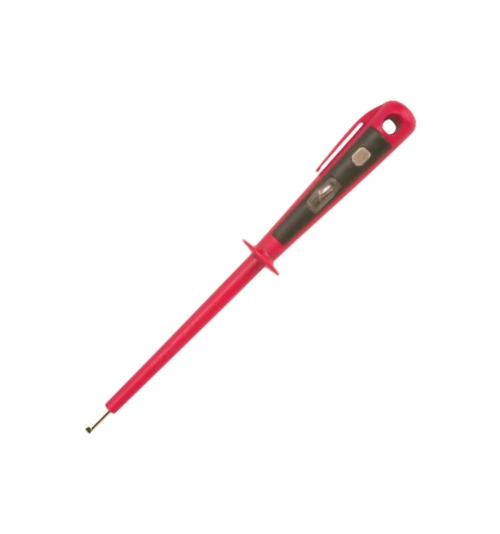
Kennedy Euro Tester - 190mm
With heavy duty one-piece moulded insulation sheaths covering both blade and transparent plastic handle for extra protection and safety. Will detect 'live' electricity supply. Suitable for AC to 125 - 250V. 3mm wide tip. Conforms to DIN VDE 0680 part 6:1977-04.
Download
Produk Lainnya
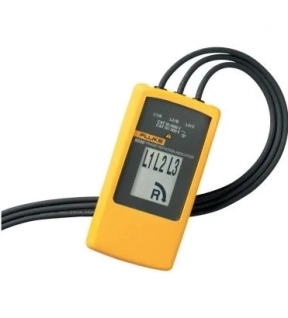
• 3 phase indication
• Indication of phase rotation
• Clear LCD display
• No battery required
• Indication of phase rotation
• Clear LCD display
• No battery required
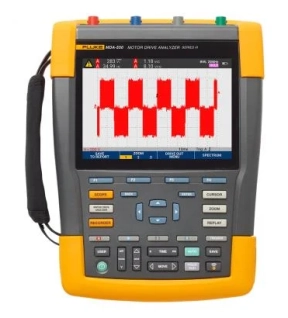
Simplify complex motor drive troubleshooting with guided test setups and automatic drive measurement that provide reliable, repeatable test results.
The Fluke MDA 550 Motor-Drive Analyzer saves time and the hassle of setting up complex measurements, and simplifies the troubleshooting process. Simply select a step-by-step guided test and measurement will show you where to make voltage and current connections, while preset measurement profiles ensure you will get all the data you need for every critical motor drive part, from input to output, the DC bus, and the motor itself . Doing simple to complex measurements? MDA-550 can do it. What's more, making reports before (as-found) and after (as-left) repairs or adjustments becomes more practical. This is all thanks to its built-in report generator feature.
The MDA-550 is an ideal portable motor drive analysis testing tool. Not only that, this tool can also be used to safely detect and solve common problems in inverter-type motor drive systems.
- Measures main motor drive parameters , including voltage, current, DC bus voltage level and AC ripple, voltage and current unbalance and harmonics, voltage modulation, and motor shaft voltage discharge.
- Performs broader harmonic measurements to identify the impact of low and high order harmonics on your power system.
- Performs guided measurements of motor drive input, DC bus, drive output, motor input, and shaft measurements with step-by-step graphical diagrams of voltage and current connections.
- Uses simple measurement settings with preset measurement profiles to automatically trigger data collection based on the selected test procedure.
- Quickly and easily generate reports that are perfect for documenting problem solving and collaborative work with others.
- Measure additional electrical parameters with a complete 500 MHz oscilloscope, meter and logger capability for a wide range of electrical and electronic measurements in industrial systems
The Fluke MDA-550 Motor Drive Analyzer uses guided test measurements to make analysis even easier
Drive input
Quickly measure input voltage and current to see if values ??are within acceptable limits by comparing the rated voltage to the actual supply voltage. It then checks the input current to determine if the current is within its maximum rating and the conductor size is appropriate. You can also check if the harmonic distortion is within an acceptable level. There are two options for doing this: carefully examine the shape of the waveform or look at the harmonics spectrum screen which displays total harmonic distortion and individual harmonics.
Imbalance of voltage and current
Check the voltage unbalance at the input terminals so you can make sure the voltage unbalance is not too high (> 6-8%), and the phase rotation is correct. You can also check for current unbalance, as too large an imbalance can indicate a driving rectifier problem.
Wider harmonic measurement
Excess harmonics are not only a threat to your rotating machine, but also to other equipment connected to the mains power system. As well as being able to detect motor drive harmonics, the MDA-550 can also detect the potential impact of inverter switching electronics. The MDA-550 has three harmonic ranges, 1st to 51st harmonics, 1 to 9 kHz, and 9 kHz to 150 kHz providing the ability to detect harmonic pollution problems.
Bus DC
In motor drives, the conversion of AC to DC inside the drive is very important. The reason is that for the best drive performance it is necessary to have the right voltage and adequate smoothing with low ripple. High ripple voltages can be an indicator of a faulty capacitor or a faulty motor connected. The logging function can be used to dynamically check the performance of the DC bus in operating mode when load is applied.
Drive output
Check drive output focusing on voltage to frequency (V/F) ratio, and voltage modulation. If the V/F ratio is high, the motor may overheat. With a low V/F ratio, the connected motor may not be able to provide the torque required at the load to carry out the process for which it is intended.
Voltage modulation
Pulse Width Modulation signal measurements are used to check for high voltage peaks that can damage motor winding insulation. The rise time or steepness of the impulse is indicated by a dV/dt reading (value of change in voltage over time), this must be compared with the specified motor insulation. Metering can also be used to measure switching frequency. Its purpose is to detect whether there is a potential problem with the switching electronics, or with grounding, as the signal drifts up and down.
Input Motor
Ensuring the supply of voltage at the motor input terminal is important. However, choosing a connecting cable between the drive and the motor is no less important. Incorrect cable selection can cause damage to the drive and motor due to overvoltage peaks. Checking that the current at the terminals is within the motor's rating is critical because excess current can cause the motor to overheat, reducing the life of the stator insulation which can cause premature failure of the motor.
Motor shaft voltage
The voltage impulse in the variable speed drive is generated from the circuit between the motor stator and the rotor until a voltage appears on the rotor shaft. If the rotor shaft voltage exceeds the insulating capacity of the bearing grease, flashover currents (glow) may occur. As a result, pitting and fluting of the motor bearing rotation occurs, namely damage that causes the motor to fail prematurely. The MDA-550 is equipped with a carbon fiber brushed probe tip that makes it easy for you to detect destructive flashover currents. Meanwhile, the amplitude of the impulse and the number of events can be used as a consideration in taking preventive action. With the addition of these accessories and capabilities, you can spot potential faults without the need to buy expensive permanent solutions.
Step-by-step guided measurements ensure you have the data you need, when you need it
The MDA-550 is designed to help you quickly and easily test and troubleshoot common three-phase and single-phase inverter-type motor drive systems. Onscreen information and a step-by-step setup guide make it easy for you to configure the analyzer. Not only that, the information and guide will also provide the required drive measurements. That way, you can quickly make informed decisions regarding maintenance. From power input to attached motor, the MDA-550 provides measurement capabilities for the fastest motor drive solutions.
The Fluke MDA 550 Motor-Drive Analyzer saves time and the hassle of setting up complex measurements, and simplifies the troubleshooting process. Simply select a step-by-step guided test and measurement will show you where to make voltage and current connections, while preset measurement profiles ensure you will get all the data you need for every critical motor drive part, from input to output, the DC bus, and the motor itself . Doing simple to complex measurements? MDA-550 can do it. What's more, making reports before (as-found) and after (as-left) repairs or adjustments becomes more practical. This is all thanks to its built-in report generator feature.
The MDA-550 is an ideal portable motor drive analysis testing tool. Not only that, this tool can also be used to safely detect and solve common problems in inverter-type motor drive systems.
- Measures main motor drive parameters , including voltage, current, DC bus voltage level and AC ripple, voltage and current unbalance and harmonics, voltage modulation, and motor shaft voltage discharge.
- Performs broader harmonic measurements to identify the impact of low and high order harmonics on your power system.
- Performs guided measurements of motor drive input, DC bus, drive output, motor input, and shaft measurements with step-by-step graphical diagrams of voltage and current connections.
- Uses simple measurement settings with preset measurement profiles to automatically trigger data collection based on the selected test procedure.
- Quickly and easily generate reports that are perfect for documenting problem solving and collaborative work with others.
- Measure additional electrical parameters with a complete 500 MHz oscilloscope, meter and logger capability for a wide range of electrical and electronic measurements in industrial systems
The Fluke MDA-550 Motor Drive Analyzer uses guided test measurements to make analysis even easier
Drive input
Quickly measure input voltage and current to see if values ??are within acceptable limits by comparing the rated voltage to the actual supply voltage. It then checks the input current to determine if the current is within its maximum rating and the conductor size is appropriate. You can also check if the harmonic distortion is within an acceptable level. There are two options for doing this: carefully examine the shape of the waveform or look at the harmonics spectrum screen which displays total harmonic distortion and individual harmonics.
Imbalance of voltage and current
Check the voltage unbalance at the input terminals so you can make sure the voltage unbalance is not too high (> 6-8%), and the phase rotation is correct. You can also check for current unbalance, as too large an imbalance can indicate a driving rectifier problem.
Wider harmonic measurement
Excess harmonics are not only a threat to your rotating machine, but also to other equipment connected to the mains power system. As well as being able to detect motor drive harmonics, the MDA-550 can also detect the potential impact of inverter switching electronics. The MDA-550 has three harmonic ranges, 1st to 51st harmonics, 1 to 9 kHz, and 9 kHz to 150 kHz providing the ability to detect harmonic pollution problems.
Bus DC
In motor drives, the conversion of AC to DC inside the drive is very important. The reason is that for the best drive performance it is necessary to have the right voltage and adequate smoothing with low ripple. High ripple voltages can be an indicator of a faulty capacitor or a faulty motor connected. The logging function can be used to dynamically check the performance of the DC bus in operating mode when load is applied.
Drive output
Check drive output focusing on voltage to frequency (V/F) ratio, and voltage modulation. If the V/F ratio is high, the motor may overheat. With a low V/F ratio, the connected motor may not be able to provide the torque required at the load to carry out the process for which it is intended.
Voltage modulation
Pulse Width Modulation signal measurements are used to check for high voltage peaks that can damage motor winding insulation. The rise time or steepness of the impulse is indicated by a dV/dt reading (value of change in voltage over time), this must be compared with the specified motor insulation. Metering can also be used to measure switching frequency. Its purpose is to detect whether there is a potential problem with the switching electronics, or with grounding, as the signal drifts up and down.
Input Motor
Ensuring the supply of voltage at the motor input terminal is important. However, choosing a connecting cable between the drive and the motor is no less important. Incorrect cable selection can cause damage to the drive and motor due to overvoltage peaks. Checking that the current at the terminals is within the motor's rating is critical because excess current can cause the motor to overheat, reducing the life of the stator insulation which can cause premature failure of the motor.
Motor shaft voltage
The voltage impulse in the variable speed drive is generated from the circuit between the motor stator and the rotor until a voltage appears on the rotor shaft. If the rotor shaft voltage exceeds the insulating capacity of the bearing grease, flashover currents (glow) may occur. As a result, pitting and fluting of the motor bearing rotation occurs, namely damage that causes the motor to fail prematurely. The MDA-550 is equipped with a carbon fiber brushed probe tip that makes it easy for you to detect destructive flashover currents. Meanwhile, the amplitude of the impulse and the number of events can be used as a consideration in taking preventive action. With the addition of these accessories and capabilities, you can spot potential faults without the need to buy expensive permanent solutions.
Step-by-step guided measurements ensure you have the data you need, when you need it
The MDA-550 is designed to help you quickly and easily test and troubleshoot common three-phase and single-phase inverter-type motor drive systems. Onscreen information and a step-by-step setup guide make it easy for you to configure the analyzer. Not only that, the information and guide will also provide the required drive measurements. That way, you can quickly make informed decisions regarding maintenance. From power input to attached motor, the MDA-550 provides measurement capabilities for the fastest motor drive solutions.
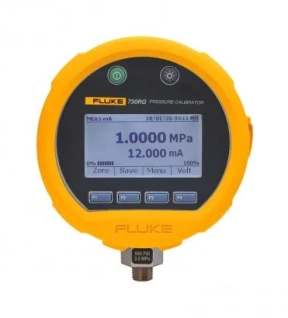
Compact smart pressure solution for on site or field
The Fluke 730G Smart Digital Pressure Calibrator combines the performance of a precision test gauge with the power of a loop calibrator and includes internal HART communication capabilities. When used with a pressure test pump, the Fluke 730G makes a highly efficient and highly accurate calibrator that can test pressure gauges, pressure switches and pressure transmitters, making it ideal for workshop instruments, measuring laboratories and pressure laboratories.
- Built-in HART communication: The integrated HART communication functionality is easy to use and you can customize HART directly, with no additional adjustment tools needed.
- Precision Pressure and Current Measurement: The 730G series provides high precision 0.02% pressure measurement accuracy and 0.01% flow measurement accuracy to meet laboratory pressure setting requirements and achieve accurate pressure calibration results.
- Intuitive operation and ease of use: High-end LCD screen and dual jack design provide a more practical and efficient user experience.
- Paperless testing and reporting: The optional 730G/PCSW management software enables paperless testing giving you the ability to automatically generate test reports and document results.
Fluke 730G/PCSW Software
- Paperless pressure calibration management: Record calibration data, perform calibration tests automatically and generate calibration reports.
- Asset management: Easily manage proven equipment and pressure standards.
- Supported pressure devices include: analog pressure gauges, digital pressure gauges, pressure transmitters, pressure sensors and pressure switches.
Increase your pressure testing capabilities with the
Fluke-700PTPK Pneumatic test pump kit:
- Combine with Fluke-730G Series Gauge, 1000 psi (69 bar) or less
- Generates pressures up to 600 psi (40 bar) with the 700PTP-1 test pump
- Connect the 730G Series meter directly to the included PTP-1 hand pump
- Includes hoses and adapters to connect the device to the pressure device to be tested
- The hardened carrying case protects the pump and gauge and allows the gauge to remain connected to the pump
Fluke-700HTPK Hydraulic Test Pump Kit
- Combine with Fluke-730G Series Gauge, 1000 psi (69 bar) or higher
- Generates pressure up to 10000 psi (690 bar) with 700HTP-2 test pump
- Connect the 730G Series Meter directly to the HTP-2 hand pump
- Includes a 700HTH-1 hose and adapter for connecting to the pressure device to be tested.
- The hardened carrying case protects the pump and gauge and allows the gauge to remain connected to the pump
The Fluke 730G Smart Digital Pressure Calibrator combines the performance of a precision test gauge with the power of a loop calibrator and includes internal HART communication capabilities. When used with a pressure test pump, the Fluke 730G makes a highly efficient and highly accurate calibrator that can test pressure gauges, pressure switches and pressure transmitters, making it ideal for workshop instruments, measuring laboratories and pressure laboratories.
- Built-in HART communication: The integrated HART communication functionality is easy to use and you can customize HART directly, with no additional adjustment tools needed.
- Precision Pressure and Current Measurement: The 730G series provides high precision 0.02% pressure measurement accuracy and 0.01% flow measurement accuracy to meet laboratory pressure setting requirements and achieve accurate pressure calibration results.
- Intuitive operation and ease of use: High-end LCD screen and dual jack design provide a more practical and efficient user experience.
- Paperless testing and reporting: The optional 730G/PCSW management software enables paperless testing giving you the ability to automatically generate test reports and document results.
Fluke 730G/PCSW Software
- Paperless pressure calibration management: Record calibration data, perform calibration tests automatically and generate calibration reports.
- Asset management: Easily manage proven equipment and pressure standards.
- Supported pressure devices include: analog pressure gauges, digital pressure gauges, pressure transmitters, pressure sensors and pressure switches.
Increase your pressure testing capabilities with the
Fluke-700PTPK Pneumatic test pump kit:
- Combine with Fluke-730G Series Gauge, 1000 psi (69 bar) or less
- Generates pressures up to 600 psi (40 bar) with the 700PTP-1 test pump
- Connect the 730G Series meter directly to the included PTP-1 hand pump
- Includes hoses and adapters to connect the device to the pressure device to be tested
- The hardened carrying case protects the pump and gauge and allows the gauge to remain connected to the pump
Fluke-700HTPK Hydraulic Test Pump Kit
- Combine with Fluke-730G Series Gauge, 1000 psi (69 bar) or higher
- Generates pressure up to 10000 psi (690 bar) with 700HTP-2 test pump
- Connect the 730G Series Meter directly to the HTP-2 hand pump
- Includes a 700HTH-1 hose and adapter for connecting to the pressure device to be tested.
- The hardened carrying case protects the pump and gauge and allows the gauge to remain connected to the pump
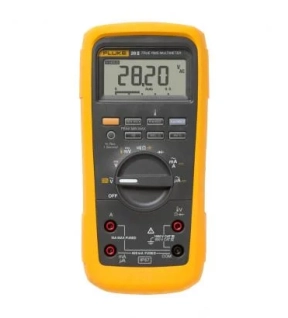
The NEW standard for rugged
The Fluke 27 II and 28 II digital multimeters set a new standard for operation in harsh conditions with the features and accuracy to solve most electrical problems. Both gauges are IP 67 rated (water and dust repellent), MSHA approved, extended operating temperature range of -15°C to +55°C (5°F to 131°F, -40°C for s /s 20 minutes) and 95 % humidity, and has been designed and tested to withstand a 3 m (10 ft) drop. The Fluke 20 Series Multimeter is designed to work in the toughest environments.
The Fluke 27 II and 28 II digital multimeters set a new standard for operation in harsh conditions with the features and accuracy to solve most electrical problems. Both gauges are IP 67 rated (water and dust repellent), MSHA approved, extended operating temperature range of -15°C to +55°C (5°F to 131°F, -40°C for s /s 20 minutes) and 95 % humidity, and has been designed and tested to withstand a 3 m (10 ft) drop. The Fluke 20 Series Multimeter is designed to work in the toughest environments.