

Measuring Tools
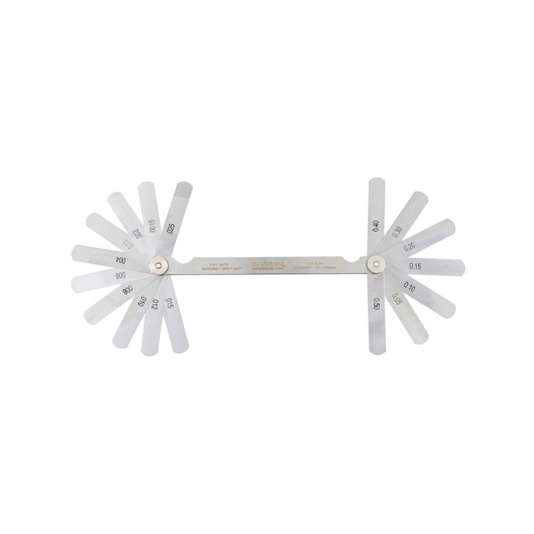
Kennedy Double Ended Imperial & Metric Feeler Gauge
Hardened and polished taper blades enclosed in a steel case. Blades are clearly marked for easy reading and are manufactured to DIN 2275.
Features and Benefits
• Hardened and polished blades for increased tool life
• Blades are clearly marked for easy readings
• Supplied in a steel case for easy storage and portability
Standards
• DIN 2275
Notes
• Blade length: (75mm/3")
• Metric: (0.05mm - 0.5mm)
• Inch: (0.0015" - 0.025")
Features and Benefits
• Hardened and polished blades for increased tool life
• Blades are clearly marked for easy readings
• Supplied in a steel case for easy storage and portability
Standards
• DIN 2275
Notes
• Blade length: (75mm/3")
• Metric: (0.05mm - 0.5mm)
• Inch: (0.0015" - 0.025")
Download
Products Lainnya
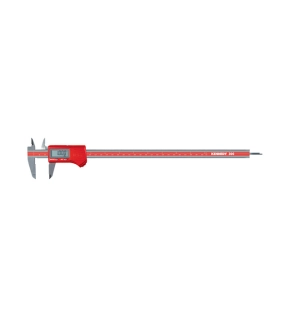
Available in a range of sizes, this digital caliper is coolant, water and dust proof to IP67 level. It has a large LCD display, fast response speed, dual readout (mm/inch) and can be used for inside, outside, depth and step measuring. Also enables absolute and relative reading.
Extra batteries available - Order Code PAN9042505E 3V Lithium Metal cell
Extra batteries available - Order Code PAN9042505E 3V Lithium Metal cell
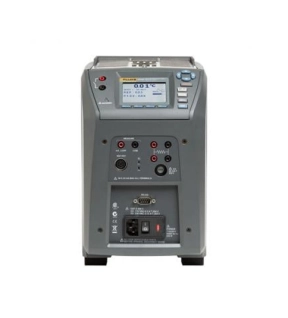
Key features
• Lightweight, portable, and fast
• Built-in two-channel readout for PRT, RTD, thermocouple, 4-20 mA current
• True reference thermometry with accuracy to ±0.01 °C
• On-board automation and documentation
• Metrology performance in accuracy, stability, uniformity, and loading
• Lightweight, portable, and fast
• Built-in two-channel readout for PRT, RTD, thermocouple, 4-20 mA current
• True reference thermometry with accuracy to ±0.01 °C
• On-board automation and documentation
• Metrology performance in accuracy, stability, uniformity, and loading
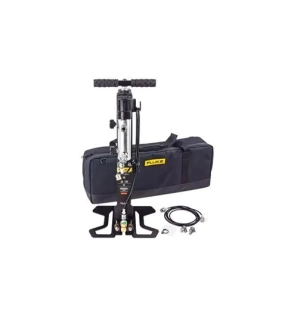
The Fluke Calibration 700HPPK Pneumatic Test Pump Kit generates and adjusts pneumatic pressures up to 21 MPa (3000 psi), without requiring a nitrogen bottle or other external pressure supply. It supplies pressure to devices under test (DUTs) that include transmitters, controllers, pilots, digital and analog gauges, and more. It’s the perfect solution for generating high pressure in the field, where conditions and operating surfaces can vary.
The 700HPPK is the ideal choice for calibration technicians, test engineers, and instrument technicians working in industries like natural gas transmission and distribution, process, aerospace and defense, who need a simple-to-use, safe and portable pressure source that they can depend on in a wide variety of conditions.
The 700HPPK contains both a calibration manifold and high pressure pump to generate and finely adjust pressures. A second model, the 700HPP, is available for people who only prefer a high pressure source.
Use the 700HPPK Test Pump Kits with 2700G Reference Pressure Gauges or 700G Precision Pressure Gauges for a complete pressure calibration solution.
Use the 700HPPK just about anywhere
The 700HPPK is designed to be at home in the lab or the field. Lightweight and portable, it features collapsible feet, built-in handhold, and a canvas carrying case, making it easy to carry to the field.
The 700HPPK works on just about any surface, so you don’t need a flat laboratory bench or flat area in the field.
With the 700HPPK, you don’t need to carry a lot of extra equipment or accessories. No PTFE tape or extra tools are required thanks to a swivel ¼ NPT female reference gauge connector that makes switching reference gauges fast and easy.
The pump kit is designed so that the calibration manifold attaches and detaches easily via quick detent pins. You won’t need to spend a lot of time setting it up or packing it away at the end of the day.
Generate high pressure accurately and safely for a wide workload
The 700HPPK generates pressure up to 21 MPA (3000 psi) within 20 seconds to full scale into a 10 cm3 volume. A detachable pressure adjustment system and adjustment control knob enables users to make fine pressure adjustments to 0.1% of reading or better. The 700HPPK includes a 2 meter (6.5-foot) pressure line and assorted pressure fittings, enabling you to connect a wide variety of DUTs for wide workload coverage. In fact, the 700HPPK covers at least five times more workload than standard range pneumatic pumps. An in-line filter system protects the system against contamination from the unit under test.
Key Features
• Generate and adjust pneumatic pressures up to 21 MPa (3000 psi)
• Rugged, portable and stable enough to go anywhere -- on any surface
• Reaches pressure in 20 seconds to full scale into a 10 cm3 volume
• Detachable pressure adjustment system for adjusting pressure, connecting reference and test devices on bench and in the field, and isolating and venting pressure
• Easily switch out reference gauges without requiring PTFE tape or tools
• 2-meter (6.5-foot) pressure line and assorted pressure fittings enable a wide variety of possible connections
• In-line filter and desiccant systems protect device from contamination from the DUT
The 700HPPK is the ideal choice for calibration technicians, test engineers, and instrument technicians working in industries like natural gas transmission and distribution, process, aerospace and defense, who need a simple-to-use, safe and portable pressure source that they can depend on in a wide variety of conditions.
The 700HPPK contains both a calibration manifold and high pressure pump to generate and finely adjust pressures. A second model, the 700HPP, is available for people who only prefer a high pressure source.
Use the 700HPPK Test Pump Kits with 2700G Reference Pressure Gauges or 700G Precision Pressure Gauges for a complete pressure calibration solution.
Use the 700HPPK just about anywhere
The 700HPPK is designed to be at home in the lab or the field. Lightweight and portable, it features collapsible feet, built-in handhold, and a canvas carrying case, making it easy to carry to the field.
The 700HPPK works on just about any surface, so you don’t need a flat laboratory bench or flat area in the field.
With the 700HPPK, you don’t need to carry a lot of extra equipment or accessories. No PTFE tape or extra tools are required thanks to a swivel ¼ NPT female reference gauge connector that makes switching reference gauges fast and easy.
The pump kit is designed so that the calibration manifold attaches and detaches easily via quick detent pins. You won’t need to spend a lot of time setting it up or packing it away at the end of the day.
Generate high pressure accurately and safely for a wide workload
The 700HPPK generates pressure up to 21 MPA (3000 psi) within 20 seconds to full scale into a 10 cm3 volume. A detachable pressure adjustment system and adjustment control knob enables users to make fine pressure adjustments to 0.1% of reading or better. The 700HPPK includes a 2 meter (6.5-foot) pressure line and assorted pressure fittings, enabling you to connect a wide variety of DUTs for wide workload coverage. In fact, the 700HPPK covers at least five times more workload than standard range pneumatic pumps. An in-line filter system protects the system against contamination from the unit under test.
Key Features
• Generate and adjust pneumatic pressures up to 21 MPa (3000 psi)
• Rugged, portable and stable enough to go anywhere -- on any surface
• Reaches pressure in 20 seconds to full scale into a 10 cm3 volume
• Detachable pressure adjustment system for adjusting pressure, connecting reference and test devices on bench and in the field, and isolating and venting pressure
• Easily switch out reference gauges without requiring PTFE tape or tools
• 2-meter (6.5-foot) pressure line and assorted pressure fittings enable a wide variety of possible connections
• In-line filter and desiccant systems protect device from contamination from the DUT
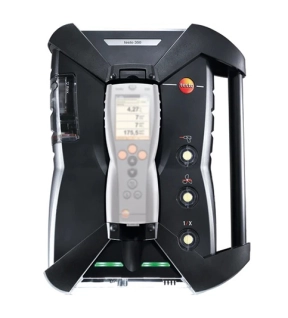
The testo 350 is a rugged, easy-to-use exhaust gas analyzer designed to meet the highest demands when it comes to carrying out precise industrial emission measurements and providing proper data administration. The Analysis Box can be operated with up to 6 gas sensors, 5 of which are optional. This allows you to select freely from sensors for CO, NO, NO2, SO2, H2S, CxHy and CO2.
Your advantages
• Increased measurement range for unlimited measurements even when gas concentrations are higher
• Easy-to-change gas sensors and easy access to wearing parts
• Sealed housing with built-in impact protection for use in harsh conditions
• Easy operation of the analyzer unit via Control Unit or easyEmission software (both products available separately)
Your advantages
• Increased measurement range for unlimited measurements even when gas concentrations are higher
• Easy-to-change gas sensors and easy access to wearing parts
• Sealed housing with built-in impact protection for use in harsh conditions
• Easy operation of the analyzer unit via Control Unit or easyEmission software (both products available separately)