

Measuring Tools
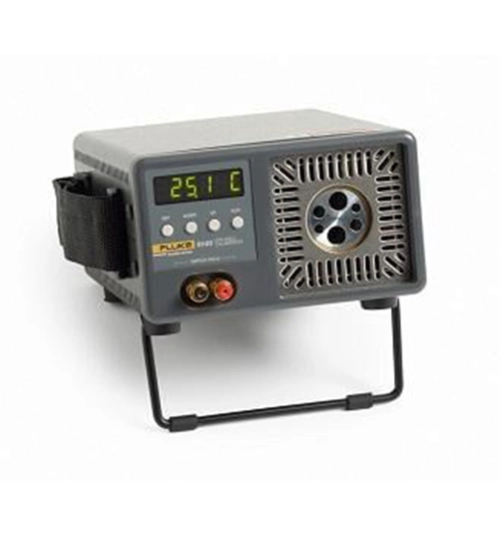
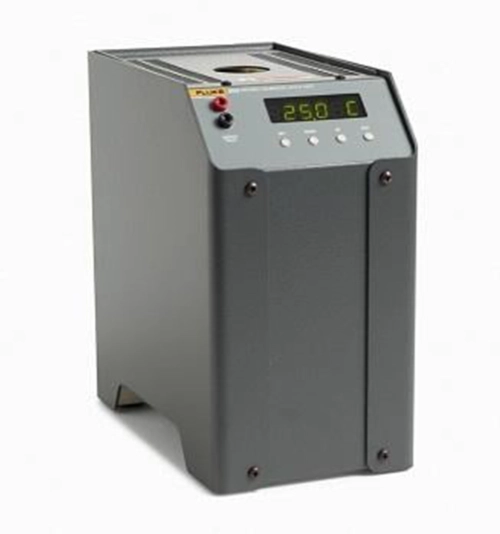
Fluke 9103, 9140 Dry-Well Calibrators & Dry Block Calibrators
Great performance in portable instruments
• Lightweight and very portable
• Accuracy to ±0.25 °C
• RS-232 interface
• Easy to recalibrate
If you’ve been using a dry well calibrator or dry block calibrator for field work, you know there’s a lot more to them than temperature range and stability. Size, weight, speed, convenience, and software are also significant.
A field dry well needs to be portable, flexible, and suitable for high-volume calibrations or certifications. If it's not, you’ll soon forget about the great stuff the sales rep told you and realize what you’ve really bought.
At Fluke Calibration, we use dry well calibrators every day in our manufacturing and calibration work, and we know what makes a dry well easy and productive to use—which is exactly how users describe our series of field dry wells. These dry wells work for you instead of the other way around.
• Lightweight and very portable
• Accuracy to ±0.25 °C
• RS-232 interface
• Easy to recalibrate
If you’ve been using a dry well calibrator or dry block calibrator for field work, you know there’s a lot more to them than temperature range and stability. Size, weight, speed, convenience, and software are also significant.
A field dry well needs to be portable, flexible, and suitable for high-volume calibrations or certifications. If it's not, you’ll soon forget about the great stuff the sales rep told you and realize what you’ve really bought.
At Fluke Calibration, we use dry well calibrators every day in our manufacturing and calibration work, and we know what makes a dry well easy and productive to use—which is exactly how users describe our series of field dry wells. These dry wells work for you instead of the other way around.
Download
Produk Lainnya
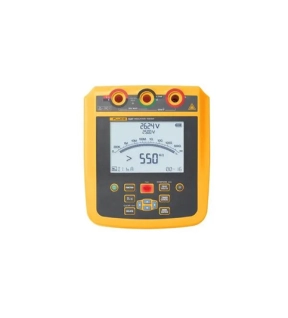
The Fluke 1535 and 1537 2,500 V Insulation Resistance Testers are engineered to simplify frontline troubleshooting whether you’re on the factory floor or working in the field at a solar installation. With user selectable test voltages from 250 V to 2,500 V and resistance measurements up to 500 GΩ these testers allow you to cover more workload with a single tool. Equipped with an intuitive user interface, a short circuit current of up to 5 mA and a CAT IV 600 V rating these portable high-voltage insulation testers can deliver rapid and stable resistance measurements no matter where you take them. The 1537 Insulation Resistance Tester also allows you to store measurements for later review or PC transfer, using the provided software.
• Selectable Voltage Tests: Tailor your tests with user-selectable voltages of 250 V, 500 V, 1000 V, and 2500 V to cover both industrial and solar applications.
• Extended Insulation Resistance Measurement: Reach up to 500 GΩ in insulation resistance measurement for a thorough analysis.
• Intelligent Calculations: Automatically calculate Polarization Index (PI) and Dielectric Absorption Ratio (DAR), minimizing the influence of environmental factors.
• High Measurement Capacity: Execute up to 1,300 measurements at 2,500 V or 6,500 measurements at 250 V on a single charge, enhancing productivity.
• Enhanced Safety Features: Benefit from a CAT IV 600V rating and a built-in voltage alarm function for heightened safety during operations.
The Fluke 1537 has these additional features:
• Extended Measurements: The Fluke 1537 enhances your testing capabilities with AC/DC voltage and resistance measurements.
• Stable Resistance Measurements: Achieve faster, more stable insulation resistance measurements with a short circuit current up to 5mA.
• Fine-tunable Test Voltage: Adjust the test voltage from 250 V to 2500 V in 100 V increments to meet specific testing requirements.
• Dielectric Discharge Rate Calculation: Automatically calculate the dielectric discharge rate (DD) to aid in identifying elusive insulation issues.
• Ramp Test Mode: Linearly increase the applied test voltage 100 V/s to help identify potentially hard to identify fault conditions.
• Visual and Audio Continuity Indicator: Verify continuity visually on the screen display or with the audible indicator so you can focus on your testing procedure without looking at the display.
• Customizable Testing Parameters: Set user-defined labels, adjust test duration, and store measurement results for a tailored testing experience.
• Effortless Data Management: Download and manage data effortlessly with the provided PC software.
• Extended Warranty: Enjoy peace of mind with an extended 3-year warranty.
Key Features
• User-selectable voltages of 250 V-2500 V
• Up to 500 GΩ insulation resistance measurement
• Short circuit current up to 5mA for fast, stable measurements
• Automatically calculate PI and DAR
• Perform 1,300+ insulation tests on a single charge
• Selectable Voltage Tests: Tailor your tests with user-selectable voltages of 250 V, 500 V, 1000 V, and 2500 V to cover both industrial and solar applications.
• Extended Insulation Resistance Measurement: Reach up to 500 GΩ in insulation resistance measurement for a thorough analysis.
• Intelligent Calculations: Automatically calculate Polarization Index (PI) and Dielectric Absorption Ratio (DAR), minimizing the influence of environmental factors.
• High Measurement Capacity: Execute up to 1,300 measurements at 2,500 V or 6,500 measurements at 250 V on a single charge, enhancing productivity.
• Enhanced Safety Features: Benefit from a CAT IV 600V rating and a built-in voltage alarm function for heightened safety during operations.
The Fluke 1537 has these additional features:
• Extended Measurements: The Fluke 1537 enhances your testing capabilities with AC/DC voltage and resistance measurements.
• Stable Resistance Measurements: Achieve faster, more stable insulation resistance measurements with a short circuit current up to 5mA.
• Fine-tunable Test Voltage: Adjust the test voltage from 250 V to 2500 V in 100 V increments to meet specific testing requirements.
• Dielectric Discharge Rate Calculation: Automatically calculate the dielectric discharge rate (DD) to aid in identifying elusive insulation issues.
• Ramp Test Mode: Linearly increase the applied test voltage 100 V/s to help identify potentially hard to identify fault conditions.
• Visual and Audio Continuity Indicator: Verify continuity visually on the screen display or with the audible indicator so you can focus on your testing procedure without looking at the display.
• Customizable Testing Parameters: Set user-defined labels, adjust test duration, and store measurement results for a tailored testing experience.
• Effortless Data Management: Download and manage data effortlessly with the provided PC software.
• Extended Warranty: Enjoy peace of mind with an extended 3-year warranty.
Key Features
• User-selectable voltages of 250 V-2500 V
• Up to 500 GΩ insulation resistance measurement
• Short circuit current up to 5mA for fast, stable measurements
• Automatically calculate PI and DAR
• Perform 1,300+ insulation tests on a single charge
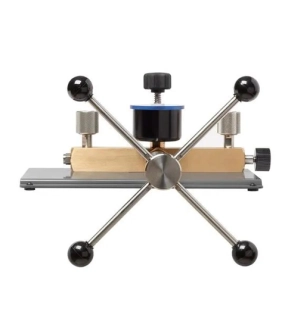
The P5514B Hydraulic Pressure Comparator is a simple, robust and economical pressure comparison test pump for calibrating gauges, switches and transducers with precise, fine adjust capabilities. It generates pressure to 10 000 psi (70 MPa), with a new Vernier fine-adjustment control that enables cardinal point calibrations. The P5514B can be mounted easily on a bench or used in mobile applications. Its robust design, with improved reservoir valve sealing, makes it a more stable pressure generator than previous versions of this model. Test port connections include adapters for common sizes of NPT and BSP. Connections are tool free, no sealing tape required, another design improvement which, coupled with the new Vernier fine adjustment control, simplifies and improves pressure testing.
About pressure comparison test pumps
A pressure comparison test pump or pressure comparator supplies the same precisely controlled pressure to both a reference gauge and device under test for calibration. Fluke Calibration hydraulic test pumps are used for checking pressure measuring instruments against master test gauges, indicators or transducers. These cost-effective instruments, which include several features from our popular line of hydraulic deadweight testers, are capable of easily generating high pressures and often include a Vernier for precise control for important calibration requirements.
Make it a pressure calibrator
The Fluke Calibration P5514B Hydraulic Comparison Test Pump, when combined with the 2700G Reference Pressure Gauges, becomes an easy-to-use alternative to traditional deadweight testers that covers a wide range of workload. For convenience, the P5514B is bundled together with selected 2700G Reference Pressure Gauges for a complete bench top pressure calibration solution. These pressure calibrators provide the accuracy, reliability, and capability you need to calibrate dial gauges, digital test gauges and pressure transmitters.
For example, the P5514B-2700G-3 is a P5514B comparison test pump, bundled together with 2700G-G70M, 2700G-G20M, 2700G-BG7M. This calibrator has three pressure ranges corresponding to the three 2700G Reference Pressure Gauges in the bundle and covers a total pressure range of –12 psi to 10 000 psi (–80 kPa to 70 MPa).
Key Features
• Easily generate pressure to 10 000 psi (70 MPa)
• Vernier fine adjustment control
• Tool-free test connectors for easy, leak free connections
• Test port connectors include adaptors for common sizes of NPT and BSP
• Robust design with improved reservoir valve sealing
About pressure comparison test pumps
A pressure comparison test pump or pressure comparator supplies the same precisely controlled pressure to both a reference gauge and device under test for calibration. Fluke Calibration hydraulic test pumps are used for checking pressure measuring instruments against master test gauges, indicators or transducers. These cost-effective instruments, which include several features from our popular line of hydraulic deadweight testers, are capable of easily generating high pressures and often include a Vernier for precise control for important calibration requirements.
Make it a pressure calibrator
The Fluke Calibration P5514B Hydraulic Comparison Test Pump, when combined with the 2700G Reference Pressure Gauges, becomes an easy-to-use alternative to traditional deadweight testers that covers a wide range of workload. For convenience, the P5514B is bundled together with selected 2700G Reference Pressure Gauges for a complete bench top pressure calibration solution. These pressure calibrators provide the accuracy, reliability, and capability you need to calibrate dial gauges, digital test gauges and pressure transmitters.
For example, the P5514B-2700G-3 is a P5514B comparison test pump, bundled together with 2700G-G70M, 2700G-G20M, 2700G-BG7M. This calibrator has three pressure ranges corresponding to the three 2700G Reference Pressure Gauges in the bundle and covers a total pressure range of –12 psi to 10 000 psi (–80 kPa to 70 MPa).
Key Features
• Easily generate pressure to 10 000 psi (70 MPa)
• Vernier fine adjustment control
• Tool-free test connectors for easy, leak free connections
• Test port connectors include adaptors for common sizes of NPT and BSP
• Robust design with improved reservoir valve sealing
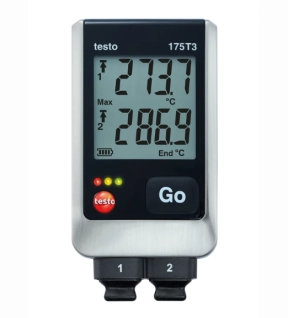
The testo 175 T3 temperature logger with its two connections for external thermocouple probes is a good idea when you would like to record your temperatures at two locations in parallel: for example when measuring the flow and return temperature on radiators. The readings are securely saved in the temperature logger and are available for later measurement data analysis and documentation.
Your advantages
• Practical for frequent and long-term measurements: memory capacity of 1 million readings, up to 3 years’ battery life
• Very large temperature measuring range from -50 °C to +1 000 °C
• Including wall bracket
• Measurement data analysis and documentation: three different software versions to choose from, basic software available as a free download
Your advantages
• Practical for frequent and long-term measurements: memory capacity of 1 million readings, up to 3 years’ battery life
• Very large temperature measuring range from -50 °C to +1 000 °C
• Including wall bracket
• Measurement data analysis and documentation: three different software versions to choose from, basic software available as a free download
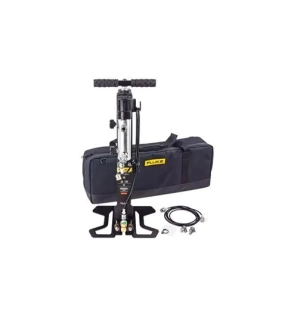
The Fluke Calibration 700HPPK Pneumatic Test Pump Kit generates and adjusts pneumatic pressures up to 21 MPa (3000 psi), without requiring a nitrogen bottle or other external pressure supply. It supplies pressure to devices under test (DUTs) that include transmitters, controllers, pilots, digital and analog gauges, and more. It’s the perfect solution for generating high pressure in the field, where conditions and operating surfaces can vary.
The 700HPPK is the ideal choice for calibration technicians, test engineers, and instrument technicians working in industries like natural gas transmission and distribution, process, aerospace and defense, who need a simple-to-use, safe and portable pressure source that they can depend on in a wide variety of conditions.
The 700HPPK contains both a calibration manifold and high pressure pump to generate and finely adjust pressures. A second model, the 700HPP, is available for people who only prefer a high pressure source.
Use the 700HPPK Test Pump Kits with 2700G Reference Pressure Gauges or 700G Precision Pressure Gauges for a complete pressure calibration solution.
Use the 700HPPK just about anywhere
The 700HPPK is designed to be at home in the lab or the field. Lightweight and portable, it features collapsible feet, built-in handhold, and a canvas carrying case, making it easy to carry to the field.
The 700HPPK works on just about any surface, so you don’t need a flat laboratory bench or flat area in the field.
With the 700HPPK, you don’t need to carry a lot of extra equipment or accessories. No PTFE tape or extra tools are required thanks to a swivel ¼ NPT female reference gauge connector that makes switching reference gauges fast and easy.
The pump kit is designed so that the calibration manifold attaches and detaches easily via quick detent pins. You won’t need to spend a lot of time setting it up or packing it away at the end of the day.
Generate high pressure accurately and safely for a wide workload
The 700HPPK generates pressure up to 21 MPA (3000 psi) within 20 seconds to full scale into a 10 cm3 volume. A detachable pressure adjustment system and adjustment control knob enables users to make fine pressure adjustments to 0.1% of reading or better. The 700HPPK includes a 2 meter (6.5-foot) pressure line and assorted pressure fittings, enabling you to connect a wide variety of DUTs for wide workload coverage. In fact, the 700HPPK covers at least five times more workload than standard range pneumatic pumps. An in-line filter system protects the system against contamination from the unit under test.
Key Features
• Generate and adjust pneumatic pressures up to 21 MPa (3000 psi)
• Rugged, portable and stable enough to go anywhere -- on any surface
• Reaches pressure in 20 seconds to full scale into a 10 cm3 volume
• Detachable pressure adjustment system for adjusting pressure, connecting reference and test devices on bench and in the field, and isolating and venting pressure
• Easily switch out reference gauges without requiring PTFE tape or tools
• 2-meter (6.5-foot) pressure line and assorted pressure fittings enable a wide variety of possible connections
• In-line filter and desiccant systems protect device from contamination from the DUT
The 700HPPK is the ideal choice for calibration technicians, test engineers, and instrument technicians working in industries like natural gas transmission and distribution, process, aerospace and defense, who need a simple-to-use, safe and portable pressure source that they can depend on in a wide variety of conditions.
The 700HPPK contains both a calibration manifold and high pressure pump to generate and finely adjust pressures. A second model, the 700HPP, is available for people who only prefer a high pressure source.
Use the 700HPPK Test Pump Kits with 2700G Reference Pressure Gauges or 700G Precision Pressure Gauges for a complete pressure calibration solution.
Use the 700HPPK just about anywhere
The 700HPPK is designed to be at home in the lab or the field. Lightweight and portable, it features collapsible feet, built-in handhold, and a canvas carrying case, making it easy to carry to the field.
The 700HPPK works on just about any surface, so you don’t need a flat laboratory bench or flat area in the field.
With the 700HPPK, you don’t need to carry a lot of extra equipment or accessories. No PTFE tape or extra tools are required thanks to a swivel ¼ NPT female reference gauge connector that makes switching reference gauges fast and easy.
The pump kit is designed so that the calibration manifold attaches and detaches easily via quick detent pins. You won’t need to spend a lot of time setting it up or packing it away at the end of the day.
Generate high pressure accurately and safely for a wide workload
The 700HPPK generates pressure up to 21 MPA (3000 psi) within 20 seconds to full scale into a 10 cm3 volume. A detachable pressure adjustment system and adjustment control knob enables users to make fine pressure adjustments to 0.1% of reading or better. The 700HPPK includes a 2 meter (6.5-foot) pressure line and assorted pressure fittings, enabling you to connect a wide variety of DUTs for wide workload coverage. In fact, the 700HPPK covers at least five times more workload than standard range pneumatic pumps. An in-line filter system protects the system against contamination from the unit under test.
Key Features
• Generate and adjust pneumatic pressures up to 21 MPa (3000 psi)
• Rugged, portable and stable enough to go anywhere -- on any surface
• Reaches pressure in 20 seconds to full scale into a 10 cm3 volume
• Detachable pressure adjustment system for adjusting pressure, connecting reference and test devices on bench and in the field, and isolating and venting pressure
• Easily switch out reference gauges without requiring PTFE tape or tools
• 2-meter (6.5-foot) pressure line and assorted pressure fittings enable a wide variety of possible connections
• In-line filter and desiccant systems protect device from contamination from the DUT